

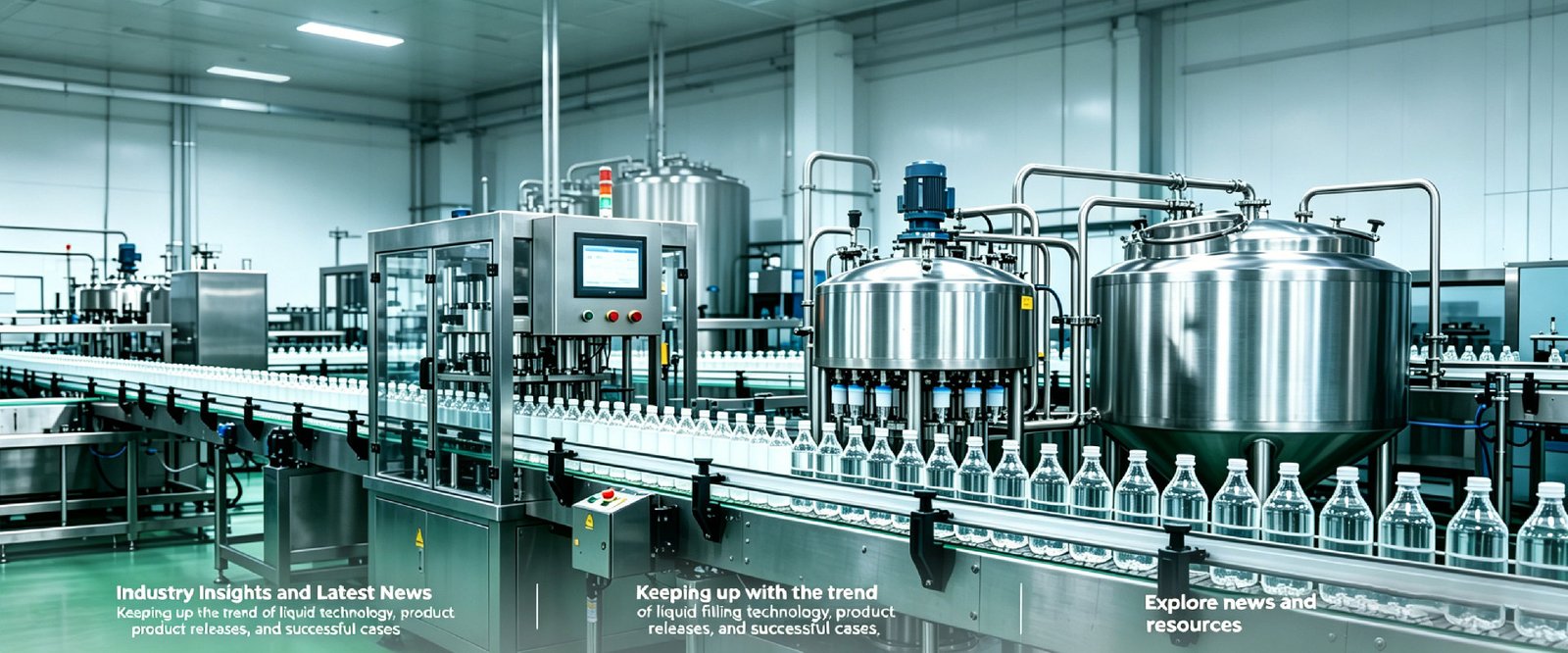
How to Select the Right Filling Machine for Your Liquid Products
- Edit:Dongguan Wanxing Machinery Equipment Co., Ltd.
- Date:2026-04-01
- Visits:1075
- Sort:Company News
How to Select the Right Filling Machine for Your Liquid Products
Choosing the wrong filling machine not only compromises efficiency but also leads to material waste and product contamination. Whether you are filling drinking water, cosmetics, or industrial chemicals, selecting the appropriate filling machine requires careful consideration of several core factors to identify the equipment best suited to your specific operations.
For many overseas manufacturers, selecting a suitable liquid filling machine poses a significant challenge. The market offers a wide array of filling machine types—linear, rotary, semi-automatic, fully automatic, and more. Making a choice without aligning it to your specific requirements not only fails to enhance production efficiency but also incurs unnecessary costs. Below, we outline the core dimensions of filling machine selection and provide a practical guide to avoiding common pitfalls, empowering you to make an informed decision.
Core Dimension 1:
Material Characteristics. The physical and chemical properties of the product being filled directly dictate the appropriate type of filling machine. For low-viscosity materials such as water, daily chemical liquids, and industrial auxiliaries, linear or rotary filling machines known for high speed and precision are the optimal choice. Linear magnetic pump filling machines are specifically engineered for low-viscosity fluids, offering stable performance and high filling efficiency. For high-viscosity materials like sauces and greases, piston fillers or rotor pump fillers are better suited. For corrosive materials, equipment must be selected based on the specific corrosive properties to prevent equipment damage and product contamination.
Core Dimension 2:
Bottle Type and Volume.** The size, shape, and volume of your containers also critically influence filling machine selection. For small-volume bottles (50ml to 1L), compact linear or rotary filling machines are appropriate. For large-volume containers (5L to 25L), multi-head large linear filling machines are better suited, as they can substantially enhance filling throughput. Our multi-head linear filling machines are specifically designed for large-volume containers and can accommodate a variety of bottle types including round bottles, square bottles, and plastic pails.
Core Dimension 3:
Production Capacity Requirements. The appropriate filling machine must be selected based on your daily output targets, shift schedules, and order volumes. If daily output is relatively low (fewer than 1,000 bottles), a semi-automatic filling machine may adequately meet your needs. If daily output is higher (exceeding 5,000 bottles), a fully automatic filling line is more appropriate. Our multi-head linear filling machines can be integrated with conveyors, capping machines, and labeling machines to form fully automatic production lines, satisfying high-capacity production requirements.
Core Dimension 4:
Accuracy and Hygiene Requirements.** For industries with stringent product quality demands—such as food, beverage, and pharmaceuticals—filling accuracy and hygienic performance are non-negotiable considerations. Our filling machines are equipped with servo and PLC control systems, achieving filling accuracy of ±0.5%. They utilize food-grade pipelines and can be optionally equipped with CIP (Clean-in-Place) functionality, fully complying with sanitary standards across all applicable countries.
Core Dimension 5:
Level of Automation. The degree of automation in a filling machine directly impacts labor costs and production efficiency. Semi-automatic filling machines require manual operation and are suited for small-scale production. Fully automatic filling machines can execute automatic feeding, filling, capping, and labeling, thereby reducing labor expenses and boosting production efficiency. We provide both semi-automatic and fully automatic filling solutions tailored to your specific requirements.
Common Selection Pitfalls:
Many manufacturers focus exclusively on equipment price while overlooking its compatibility with their specific products. This often results in equipment that fails to meet production needs after purchase, leading to wasted investment. Additionally, some manufacturers neglect after-sales service considerations. When equipment malfunctions occur, the lack of timely repair support disrupts production. Therefore, when selecting equipment, it is essential to evaluate not only price but also product quality, compatibility, and the robustness of after-sales support.
Selecting the right filling machine is paramount to enhancing production efficiency and reducing operational costs. If you are uncertain which filling machine best suits your products, contact us to discuss your project. Our professional team will provide you with complimentary selection guidance and customized solutions.